
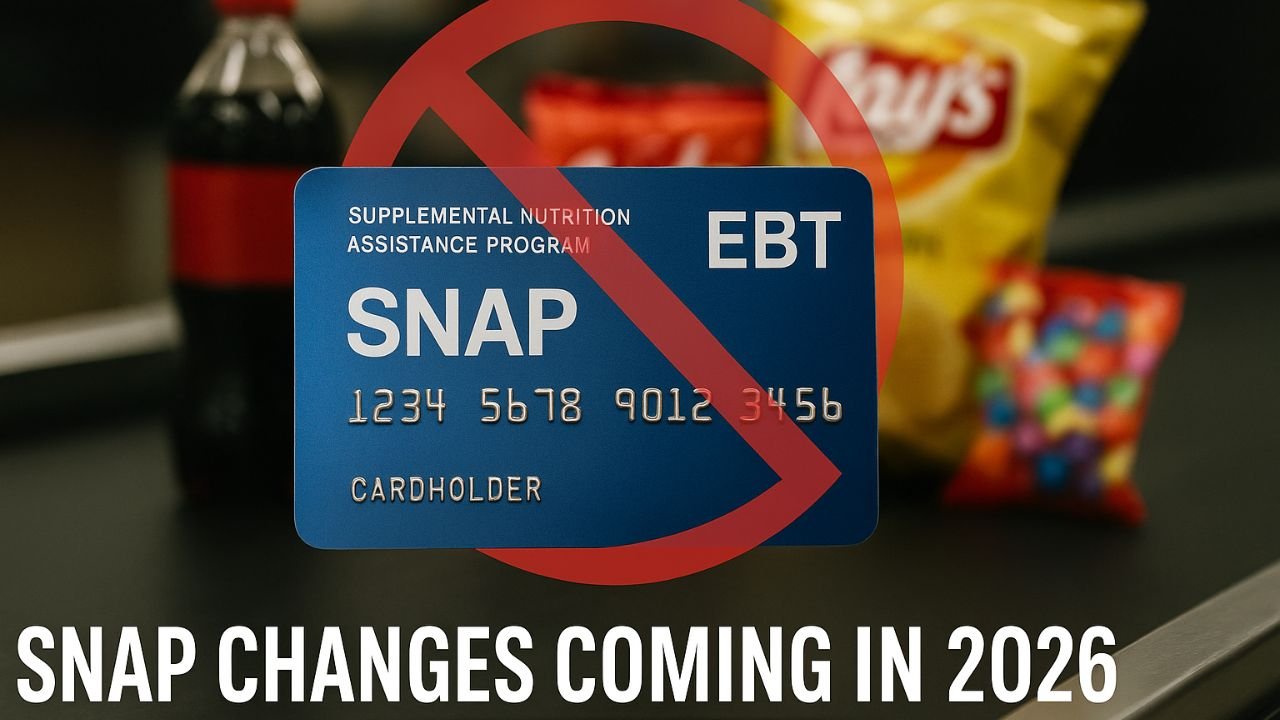
A growing policy shift around nutrition assistance is gaining national attention. Reports confirm that 18 U.S. states plan to restrict the purchase of certain junk food items using SNAP benefits starting next year, marking one of the most significant changes to the Supplemental Nutrition Assistance Program in decades.
This development has sparked strong reactions from policymakers, public health experts, retailers, and SNAP recipients alike. Below is a clear, fact-based breakdown of what is changing, why it matters, and how it could affect millions of Americans.
Table of Contents
Understanding SNAP and How It Works Today

The Supplemental Nutrition Assistance Program (SNAP) supports over 40 million low-income Americans by helping them buy food through monthly benefits loaded onto an EBT card.
At present, SNAP benefits can be used for most grocery items, including:
- Sugary drinks such as soda
- Candy and sweet snacks
- Processed desserts
- Many packaged and highly refined foods
The program already restricts purchases of alcohol, tobacco, hot prepared meals, and non-food items. However, nutritional quality has largely been left to individual choice.
What Is Changing in 2026?

Beginning in 2026, 18 states will introduce new SNAP food restrictions after receiving approval from the U.S. Department of Agriculture (USDA).
Key Change at a Glance
SNAP benefits will no longer be usable for specific “junk food” items, particularly:
- Sugar-sweetened beverages
- Candy and confectionery products
- Energy drinks with minimal nutritional value
- Certain highly processed snack foods
Exact definitions may vary by state, but the goal is to limit foods with little to no nutritional benefit.
States Participating in the SNAP Food Restrictions

The states confirmed to move forward with restrictions include:
Texas, Florida, Oklahoma, Louisiana, Arkansas, Missouri, Tennessee, South Carolina, Virginia, West Virginia, Indiana, Iowa, Nebraska, North Dakota, Utah, Idaho, Colorado, and Hawaii.
Together, these states account for millions of SNAP households, making this a policy shift with nationwide implications.
Why Are States Making This Move?
Public Health Concerns
Supporters argue that SNAP should better align with modern health goals. Rates of obesity, diabetes, and heart disease are disproportionately higher among low-income populations, and diet plays a major role.
State officials backing the change say taxpayer-funded assistance should encourage:
- Healthier eating habits
- Reduced sugar consumption
- Better long-term health outcomes
Federal Support Through Waivers
While SNAP is federally funded, states can request USDA waivers to test alternative program rules. These waivers form part of a broader federal initiative aimed at improving national nutrition standards.
Concerns and Criticism From Opponents
Despite public health intentions, the policy is controversial.
Loss of Choice
Critics argue that SNAP recipients already face limited options and that restricting food choices:
- Treats low-income families differently from others
- Adds stigma to benefit use
- Assumes the government knows what families should eat
Retail and Administrative Challenges
Retailers may face:
- Increased checkout confusion
- Updated point-of-sale systems
- Disputes over what qualifies as restricted
States must also invest in education and enforcement to ensure smooth implementation.
What SNAP Recipients Should Know Now
Although the changes do not take effect until 2026, recipients should be aware of what lies ahead.
What Will Not Change
- SNAP benefit amounts are not being reduced
- Healthy staples like fruits, vegetables, dairy, grains, and proteins remain eligible
- EBT cards and payment systems remain the same
What Will Require Adjustment
- Some familiar snack and drink items may no longer be covered
- Shopping habits may need to shift toward whole or minimally processed foods
- State-specific rules will matter more than before
Will More States Follow?
Yes, possibly. Several other states are reportedly considering similar waiver requests, especially if early results show improved health outcomes without major disruptions.
If successful, this could mark the beginning of a nationwide SNAP reform trend, reshaping how food assistance programs balance freedom of choice with public health goals.
Expert Perspective: A Major Turning Point for SNAP
From a policy analysis standpoint, this change represents a philosophical shift. SNAP is moving from being purely an access program to one that also promotes nutritional outcomes.
Whether this results in:
- Better health
- Higher food security
- Or unintended burdens
will depend heavily on implementation, education, and flexibility at the state level.
Final Takeaway
The news is accurate and significant. Starting in 2026, 18 states will limit the use of SNAP benefits for certain junk food items, affecting how millions of families shop for food.
As details continue to emerge, SNAP recipients should stay informed through state agencies, while policymakers will be closely watched to see whether this experiment truly delivers healthier outcomes without deepening hardship.
This is not just a SNAP update, it is a major test of how social assistance and public health intersect in modern America.
18 states will limit junk food from SNAP benefits next year https://t.co/WzR7EYJtyA pic.twitter.com/31fMi9Z9lM
— Action News 5 (@WMCActionNews5) December 14, 2025